Client Onboarding Checklist for Agencies: From Signed Deal to First Deliverable
By Gaurav Sharma · 15 October 2026 · 6 min read
In short
- A good client onboarding checklist covers four stages: internal handover after the deal is won, setup of the client record and project, a kickoff that agrees goals, approvers and communication rules, and a first deliverable with a clear brief. Running the same checklist every time makes new accounts calmer for the client and the team.
The deal is signed. Everyone in sales is happy, the founder has posted about it on LinkedIn, and the client is excited to get started.
Then the first week happens. The account manager does not have the client's logo files. The designer is waiting for social media logins. Nobody remembers that the client mentioned, in the second sales call, that their marketing head is the only person who can approve anything.
By week three, the client is already wondering whether they picked the right agency.
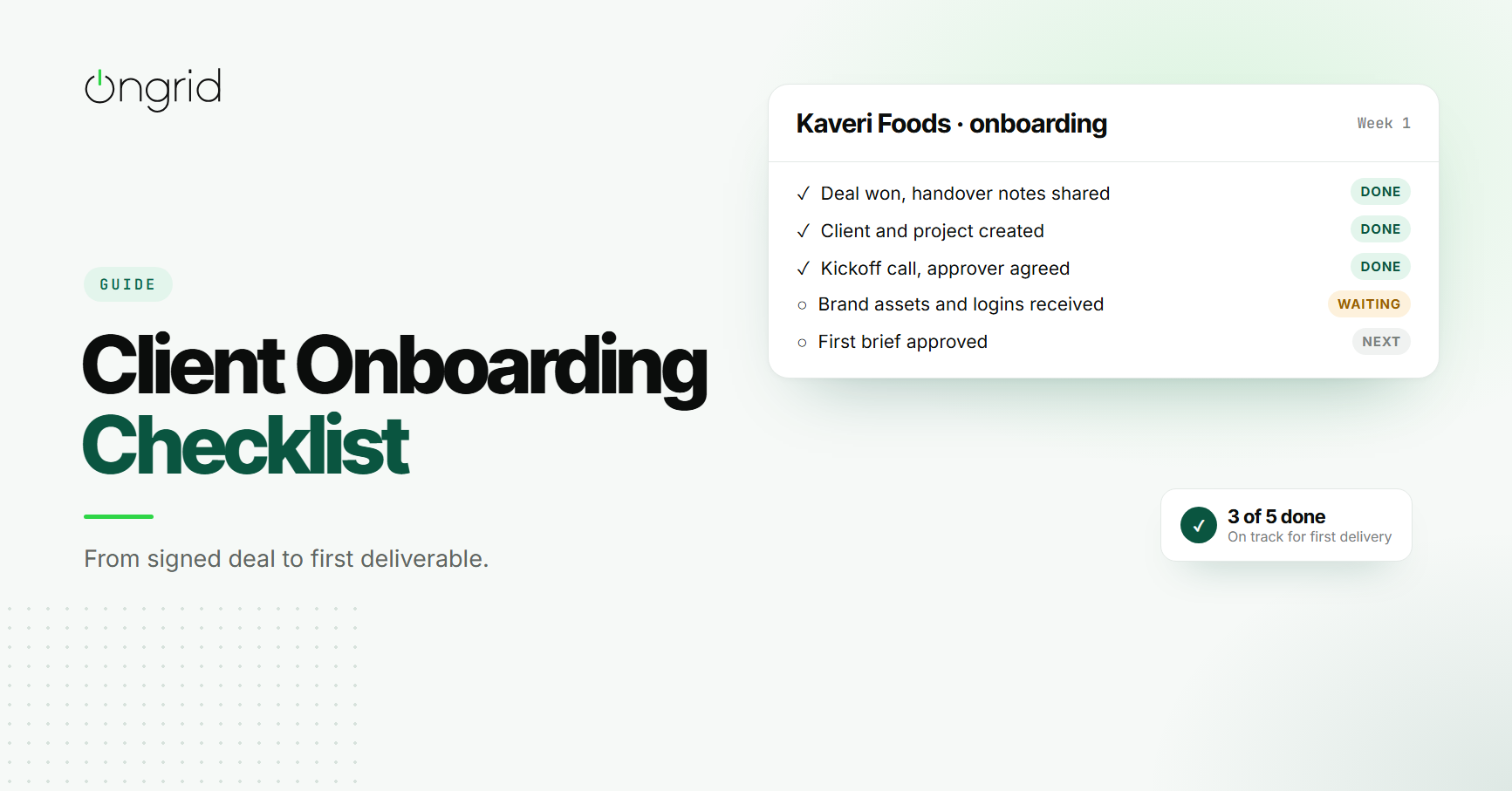
A client onboarding checklist stops this from happening. It turns the first two weeks into a routine your team runs the same way every time, so new clients get a calm, organised start instead of a scramble. Here is the checklist we recommend, broken into four stages.
What Is Client Onboarding?
Client onboarding is everything that happens between a client signing up and your agency delivering the first piece of work. It covers the internal handover, setting up the account, the kickoff meeting, collecting access and assets, and briefing the first deliverable.
It is also the period when the client forms their opinion of how you work. A smooth onboarding buys you patience later. A messy one makes every small mistake look like a pattern.
Where Client Onboarding Usually Goes Wrong
Sales Knowledge Gets Lost
The salesperson spent weeks learning what the client cares about, who makes decisions and what went wrong with their last agency. Very little of that reaches the delivery team, who end up asking the client the same questions again.
Work Starts Before Access Arrives
The team is told to begin, but the brand guidelines, logins and previous creatives have not arrived. People either wait, or make assumptions they will have to undo later.
Nobody Agrees How Approvals Work
If the first deliverable goes to three people on the client side and comes back with three sets of comments, you have learned the approval process the hard way.
Communication Has No Rules
Some messages arrive by email, some on WhatsApp, some as calls to the founder. Within a week, important decisions are spread across channels nobody can search.
The Client Onboarding Checklist
Use these four stages for every new account. Adjust the details for your services, but keep the structure.
Stage 1: Internal Handover (Day 0 to 1)
Mark the deal as won and record the final scope, fees and start date.
Sales shares handover notes: goals, decision makers, concerns raised during the deal and anything promised verbally.
Assign the account owner and the core delivery team.
Check the team's current workload before committing to a start date.
Stage 2: Account Setup (Day 1 to 3)
Create the client record with brand name, main contact and email.
Create the project, link it to the won deal, and add the team members.
Attach the onboarding SOP so everyone follows the same steps.
Send the welcome email with the kickoff invite and a short list of what you need from them.
Raise the first invoice if your terms require advance payment.
Stage 3: Kickoff (Day 3 to 7)
The kickoff meeting is the most important hour of onboarding. Use it to agree:
The client's goals for the first three months, and how success will be measured.
The exact scope of work, including what is not included.
One named approver on the client side, and how many review rounds are included.
Communication channels, response times and the meeting rhythm (for example, a weekly 30-minute call).
Key dates for the first month, including festivals, launches or campaigns the client is planning.
Send a short written summary the same day and ask the client to confirm it. That summary becomes your reference when questions come up later.
Stage 4: First Deliverable (Week 2)
Collect brand guidelines, logos, fonts, previous creatives and account logins.
Write the first brief and get it approved by the named approver before work begins.
Break the brief into tasks with owners and deadlines.
Review the first deliverable internally before the client sees it.
Hold a short check-in after the first delivery: what worked, what should change?
Who Should Own Onboarding?
One person should own the whole checklist, usually the account manager or project manager who will run the client day to day. Sales still matters: they should hand over everything they learned and join the kickoff to introduce the team. But once the deal is won, the client needs a single, clear point of contact.
That owner is responsible for ticking off each stage, chasing what is missing and telling the team when the account is ready for regular work. Without a named owner, onboarding tasks fall between sales and delivery, and the client is the first to notice.
What to Send in the Welcome Email
A good welcome email is short and practical. It should introduce the account owner, confirm the start date, invite the client to the kickoff, and list exactly what you need from them.
Hi Neha, welcome to the team! I'm Ravi, and I'll be your main point of contact. Our kickoff call is on Thursday at 11 am. Before then, could you share your brand guidelines, logo files, and access to your Instagram and Facebook pages? It will help us start on the first campaign straight after the call.
Tips for a Smoother Onboarding
Use the same checklist every time. Consistency is the whole point. Improve the checklist after each new client, not the process for each one.
Fill in what you already know. Do not ask the client for information they already gave sales.
Brief properly from day one. Our creative brief template covers what the first brief should include.
Agree approvals early. A clear client approval process set up at kickoff saves weeks of revision rounds later.
Plan for capacity. If you are already managing multiple client projects, check who has room before promising a start date.
Adapting the Client Onboarding Checklist for Different Clients
Not every new client needs the same depth of onboarding. A small one-off project and a large annual retainer should follow the same client onboarding checklist, but the time spent on each stage will be different.
For a short project, the kickoff can be a 20-minute call and the handover a few lines in the project notes. For a retainer with several stakeholders, plan a longer kickoff, meet the approver separately if needed, and write a short account plan covering the first three months.
Clients who have worked with an agency before usually move faster, but they also arrive with habits from their last agency. Ask what worked and what did not. It is the quickest way to avoid repeating someone else's mistakes.
How to Tell Whether Onboarding Worked
At the end of the first month, look back at a few simple signals:
Did the first deliverable go out on the date agreed at kickoff?
How many revision rounds did it take, and was the feedback consolidated by the approver?
Did the team have to chase the client for assets or logins after week one?
Are client messages coming through the agreed channel, or scattered everywhere?
If the answers are mostly positive, the onboarding did its job. If not, add the missing step to your client onboarding checklist so the next client does not hit the same problem.
How OnGrid Helps Agencies Onboard Clients
In OnGrid, the handover starts in the CRM. When a deal is marked won, you can create a project straight from it, choosing the project name, department, owner, members and the SOP the team should follow. The project stays linked to the deal it came from.
Each client has its own record with brand and contact details, and you can limit who on the team can see it. The client page brings together their contacts, deals and projects, along with active projects, open deals, won value and approved expenses.
From there, the first brief goes through the Briefs module with a named approver, and the work is tracked as tasks with owners and deadlines. Your onboarding SOP lives in the SOP knowledge base and can be linked from the project, so every new account follows the same steps.
Final Thoughts
Clients do not judge you on the first deliverable alone. They judge you on how organised the whole start feels.
A client onboarding checklist makes that start predictable: a proper handover, a set-up account, a kickoff that agrees the rules, and a first deliverable built on an approved brief.
Write your checklist once, use it for every new client, and improve it a little each time. Your team will spend less time scrambling, and your clients will notice.
Frequently asked questions
1. What is a client onboarding checklist?
It is a list of the steps an agency takes between winning a client and delivering the first piece of work: handover, setup, kickoff, access, briefing and the first delivery. It makes sure nothing is missed, whoever is handling the account.
2. How long should client onboarding take?
For most agency retainers, one to two weeks from signed agreement to first deliverable is realistic. Larger accounts with many stakeholders or technical setup can take longer.
3. What should be covered in a client kickoff meeting?
Goals and success measures, the scope of work, the named approver, review rounds, communication channels, meeting rhythm, key dates and what the agency needs from the client to get started.
4. Who should own client onboarding in an agency?
Usually the account manager or project manager assigned to the client. Sales should hand over everything they learned during the deal, but one person on the delivery side should own the checklist.
5. What are common client onboarding mistakes?
Starting work before access and assets arrive, not agreeing on an approver, losing details from the sales conversation, and setting no clear communication rules in the first week.