How to Build a Client Approval Process That Doesn't Stall Your Projects
By Gaurav Sharma · 15 October 2026 · 6 min read
In short
- A reliable client approval process names one approver at kickoff, splits work into a few approval stages, limits revision rounds in writing, reviews work internally first, and records every approval against the deliverable. When a client goes quiet, the timeline moves with them, not your team's evenings.
"Looks great! Just one small thing."
If you work in an agency, you know that sentence. It usually arrives on the fifth round of feedback, three days after the deadline, from someone who was not in any of the previous conversations.
Most projects do not stall because the work is slow. They stall because the work is finished and waiting: for a reply, for a decision, for the right person to look at it.
A clear client approval process will not make every client fast. But it will make delays visible, keep feedback in one place, and stop your team from absorbing every late reply with late nights.
What Is a Client Approval Process?
A client approval process is the set of steps a deliverable goes through before the client signs it off. It answers a few basic questions in advance:
Who on the client side can approve the work?
At which stages do they review it?
How should feedback be shared?
How many revision rounds are included?
What happens if an approval is late?
When these are agreed at the start, approvals become a routine part of the project instead of a negotiation every time.
Where Client Approvals Usually Break Down
There Is No Single Approver
The marketing manager likes the design. Then the founder sees it. Then the founder's brother, who "has a good eye", sees it too. Each person is reacting to a different version, and your team is trying to satisfy all of them.
Feedback Arrives Everywhere
Some comments come by email, some on WhatsApp, some on a call nobody took notes on. Your designer ends up working from whichever message they saw last.
Revision Rounds Have No Limit
If the proposal does not say how many rounds are included, the honest answer is "as many as the client wants". That is fine for the client and very expensive for you.
Big Decisions Get Made Too Late
When the client sees the concept, the copy and the final design all at once, they will question all three at once. Changing the concept at the final stage throws away most of the work.
Silence Is Treated as Approval
The client does not reply, so the team assumes it is fine and moves ahead. Two weeks later the client comes back with changes, and now they affect three other deliverables.
How to Build a Client Approval Process, Step by Step
1. Agree on the Approver at Kickoff
In the very first meeting, ask: "Who will give final approval on this work?" Write the name down in the brief and the proposal. If you need a structure for that brief, start with our creative brief template.
Other stakeholders can still give input. The approver's job is to collect it, resolve any disagreements on their side, and send you one consolidated set of feedback.
2. Split the Work Into Approval Stages
Do not wait until the end to ask for approval. For most creative projects, three stages work well:
Direction: the concept, mood board or outline.
First draft: the actual work, open to changes.
Final: polish and corrections only.
Each stage locks the decisions from the one before. If the client approved the concept, the final stage is not the time to change it, and you can say so politely because it is written down.
3. Put Revision Rounds in Writing
Two rounds per stage is a sensible default for most creative work. Put it in the proposal or statement of work, along with what happens after that: either an extra cost or a revised timeline.
You do not have to enforce it every time. But having it written down changes the conversation from "you're being difficult" to "this is what we agreed".
4. Review Internally Before the Client Sees Anything
Spelling mistakes, the wrong logo version, a missed size in the deliverables list. These are the easiest things for a client to spot and the most damaging for their confidence in your team.
A short internal review against the brief catches most of them. It also means the client spends their review time on the decisions that actually need them.
5. Make Every Approval Request Specific
"Please have a look and let us know" invites open-ended feedback and no deadline. A good approval request says three things: what you want approved, by when, and what happens next.
Hi Neha, the first drafts of the six Diwali posts are attached. Could you approve them or send consolidated feedback by Thursday, 5 pm? Once approved, we will move to final artwork and stay on track for the 24 Oct launch.
6. Keep Feedback in One Place
Pick one channel for formal feedback and gently redirect anything that arrives elsewhere. If a change request comes in on a call or a chat, add it to the task or document yourself and confirm it back in writing.
The rule is simple: if it is not recorded against the deliverable, it is not a confirmed change.
7. Record the Approval Against the Work
When the client says yes, record it on the deliverable itself, with the date and the version that was approved. "Approved on WhatsApp sometime last week" will not help anyone when the question comes up again.
8. Agree on What Happens When Approvals Are Late
This is the step most agencies skip, and the one that protects your team the most. Agree at kickoff that if an approval arrives late, the delivery date moves by the same number of days.
Most clients accept this easily when it is explained upfront. It is much harder to introduce once a project is already late.
A Simple Approval Workflow Example
Here is how one deliverable might move through the process:
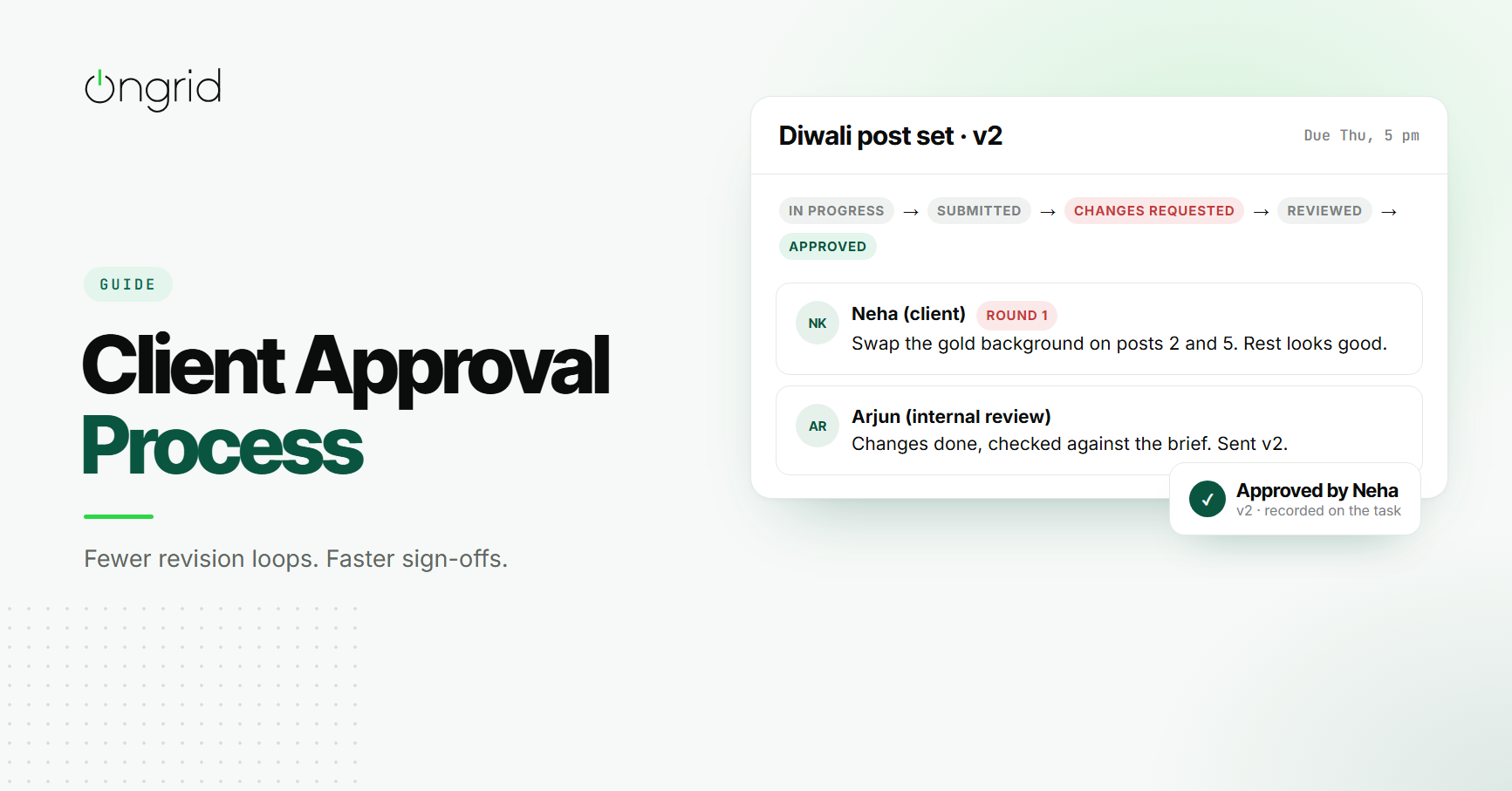
Backlog → In Progress → Submitted → Changes Requested → Reviewed → Approved → Done
Submitted: the designer has finished a version and handed it over for internal review.
Changes Requested: the reviewer or client has asked for revisions, with notes attached.
Reviewed: the work has passed internal review and is ready for the client.
Approved: the client has signed off on this version.
Done: the work has been delivered or published.
The value of a workflow like this is that anyone can see where a deliverable is stuck. If ten tasks are sitting in Reviewed, the bottleneck is not your designers. It also means you can stop chasing your team for updates, because the status already tells you.
How OnGrid Supports Your Approval Process
OnGrid gives every task a review path that matches the workflow above, including a Changes Requested stage, so it is always clear whether work is with your team, with a reviewer or waiting for a decision.
Briefs go through their own approval before work begins. Each brief names an approver and a reviewer, and a rejected brief always comes back with a reason the author can act on.
Pending brief reviews show up in a single Approvals view for the people responsible, alongside other requests like leave and work-from-home, so nothing waits unnoticed in someone's inbox.
Because tasks, briefs, files and comments live together, the feedback and the approved version stay attached to the work instead of being scattered across chats.
Final Thoughts
You cannot control how fast a client replies. You can control how clearly you ask, how many decisions you ask for at once, and what happens when a reply is late.
Name one approver, review in stages, limit revision rounds in writing, and record every approval against the work. Then agree upfront that late approvals move the timeline.
The result is not just faster sign-offs. It is a team that stops paying for delays they did not cause.
Frequently asked questions
1. What is a client approval process?
It is the agreed set of steps a piece of work goes through before the client signs it off: who reviews it, at which stages, how feedback is given, how many revision rounds are included, and how the final approval is recorded.
2. How many revision rounds should an agency include?
Two rounds per stage is common for most creative work. What matters more is that the number is written into the proposal or statement of work, and that extra rounds have a clear cost or timeline impact.
3. What should you do when a client does not respond to an approval request?
Send one friendly reminder with the date and what happens next, then follow the delay rule you agreed at kickoff, usually that the delivery date moves by the same number of days the approval was late.
4. Who should approve creative work on the client side?
One named person with the authority to say yes. Others can give input, but their feedback should be consolidated by the approver before it reaches your team.
5. Should work be reviewed internally before the client sees it?
Yes. A quick internal review catches typos, missed requirements and brief mismatches, which are the easiest feedback for a client to give and the most embarrassing to receive.