Leave Policy Template for Small Teams: What to Include and How to Write It
By Gaurav Sharma · 15 October 2026 · 6 min read
In short
- A good leave policy template covers the leave types you offer, how many days each gets, how leave is requested and approved, what notice is needed, whether unused days carry forward, and what happens when leave runs out. Keep it to two pages, check your state rules, and make balances visible so nobody has to ask HR.
Rahul asks for Friday off. His lead says yes on WhatsApp. Two weeks later, payroll asks whether it was casual leave or sick leave, nobody remembers, and Rahul is surprised to learn he has already used up his casual days for the year.
Nobody was being difficult. The team simply never wrote down how leave works. It lived in the founder's head, a few old messages and a spreadsheet that someone updates when they remember.
That works until the team grows past six or seven people. Then every leave request becomes a small negotiation, and every inconsistency feels unfair to someone.
A leave policy template fixes this by answering the common questions once, in writing, for everyone. This guide walks through what to include, gives you an outline you can copy, and covers the mistakes small teams make most often.
What Is a Leave Policy?
A leave policy is a short document that explains what time off employees can take, how much of it, how to request it and who approves it. It also covers the awkward edge cases: what happens to unused days, what happens when someone runs out, and how public holidays fit in.
It is not a legal contract, but it should match your appointment letters and the labour laws that apply to your business. For a general background on paid time off and how it differs between countries, Wikipedia's article on annual leave is a useful starting point.
Why Small Teams Struggle With Leave
The Rules Change Depending on Who You Ask
One lead approves half days without a second thought. Another wants a week's notice for a single day off. Without a written policy, the rules depend on the manager, and people notice.
Nobody Knows Their Balance
If employees have to message HR to find out how many days they have left, most will not bother. They take leave, assume it is fine, and find out at the end of the year that it was not.
Approvals Happen in Chat
A thumbs-up in a group chat is not a record. When someone asks later whether the leave was approved, by whom and for which dates, there is nothing reliable to check.
Leave Clashes With Deadlines
Two designers on the same account both take the same week off. Neither did anything wrong, but nobody could see the overlap until the client deadline was already at risk.
The Leave Policy Template
Use these sections as your outline. Keep the language plain, and add one example wherever a rule could be read two ways.
1. Purpose and Scope
One or two sentences on who the policy covers: full-time employees, part-time staff, interns, people on probation. If different groups get different leave, say so here.
2. Leave Year
Say whether your leave year runs January to December or April to March. It sounds minor, but it decides when balances reset and when carry forward kicks in.
3. Leave Types and Days
List each type of leave, how many days it gets, and what it is for. A common setup for a small Indian team looks like this:
Earned or annual leave: 12 days a year, for planned time off.
Sick leave: 6 days a year, for illness or medical appointments.
Casual or personal leave: a few days for personal errands and emergencies.
Unpaid leave: available once paid leave is used up, subject to approval.
These numbers are only an example. The minimum you must offer depends on your state and type of business, so check the applicable Shops and Establishments rules before you finalise anything.
4. How Leave Is Credited
Decide whether employees get the full year's leave on day one or earn it month by month. Monthly credit is fairer for new joiners and protects you if someone leaves early in the year. Yearly credit is simpler to explain.
5. How to Apply and How Much Notice
Say where leave requests go and how much notice is expected. For example: planned leave of three days or more needs two weeks' notice, single days need two working days, and sick leave can be applied for on the day or the day after.
6. Who Approves
Name the role that approves leave, usually the team lead, and who steps in when the lead is away. Say how quickly a request should get an answer, such as within two working days.
7. Carry Forward and Lapse
Spell out what happens to unused days at the end of the year. Many teams let up to five earned days carry forward and let sick and casual leave lapse. Whatever you choose, write the cap as a number.
8. When Leave Runs Out
Decide whether extra days are blocked, allowed as unpaid leave, or allowed only with approval. This is the rule people argue about most, so make it unambiguous.
9. Public Holidays
Publish the holiday list for the year at the start of the leave year. Say what happens if a holiday falls inside a block of leave, and whether people working different shifts get the same holidays.
10. Half Days and Work From Home
If you allow half days or work-from-home days, say how they are requested and whether they count against leave. Our guide to writing a work from home policy covers this in more detail.
A Short Sample Policy
Here is what the core of a small team's leave policy might look like once the sections above are filled in:
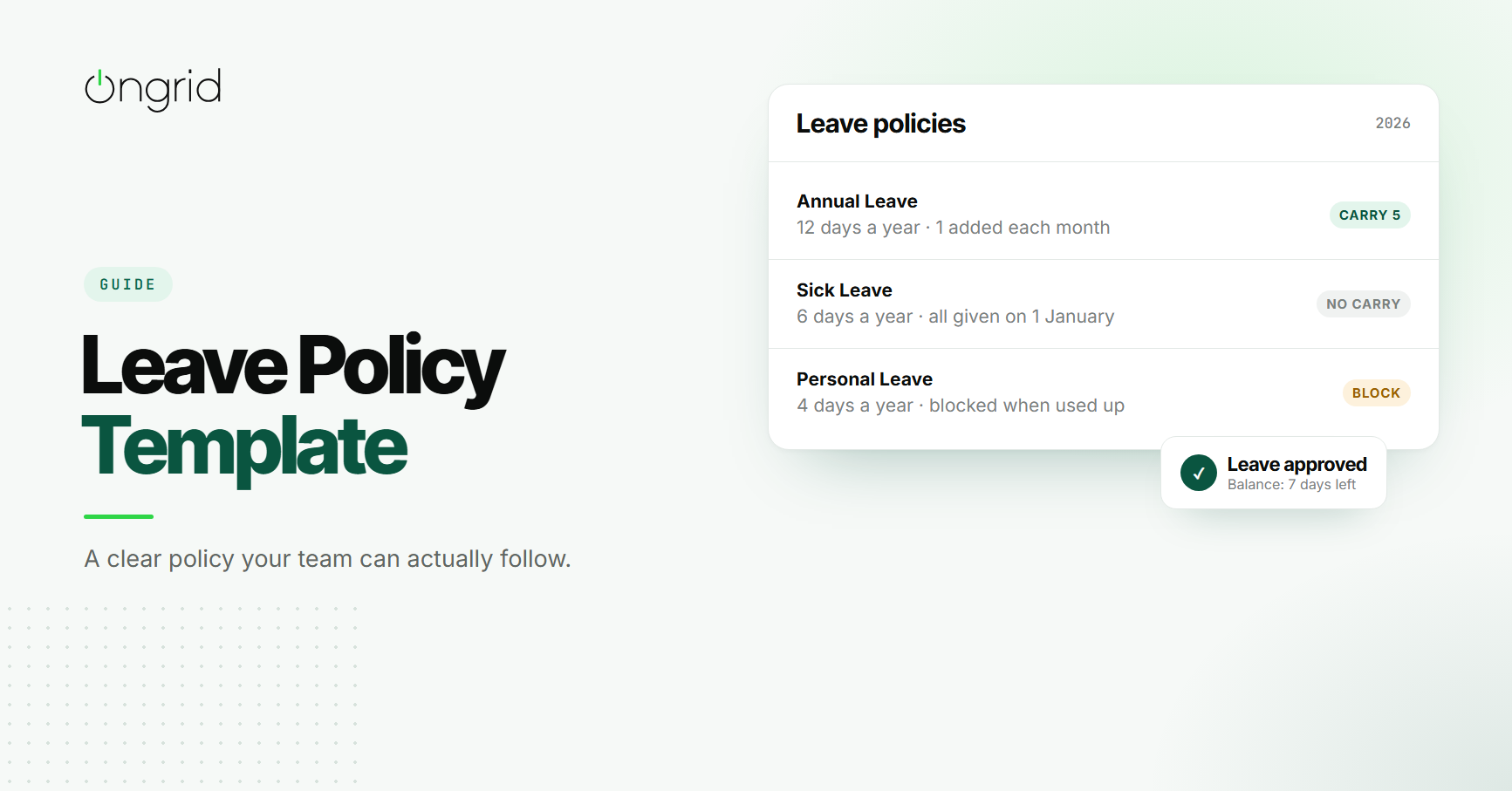
Leave year: January to December. Annual leave: 12 days a year, credited at one day per month; up to 5 unused days carry into the next year. Sick leave: 6 days a year, credited on 1 January, does not carry forward; a medical note is needed for more than two days in a row. Personal leave: 4 days a year for personal errands and emergencies. Unpaid leave: available with your lead's approval once paid leave is used up. Notice: two weeks for three or more days, two working days for a single day. Approval: your team lead, within two working days.
That is roughly 120 words, and it answers most of the questions your team will ever ask about leave. Everything else can sit in the longer document for the rare edge case.
Common Leave Policy Mistakes
Copying a large company's policy. Fifteen leave types and a ten-page document will not get read by a team of twelve.
Leaving numbers vague. "Reasonable notice" means something different to everyone. Write "two weeks".
No record of approvals. If approvals happen in chat, balances will drift from reality within a few months.
Hiding balances. People make better decisions about time off when they can see what they have left.
Never reviewing it. Revisit the policy once a year, especially after the team grows or starts working across shifts.
How to Roll Out a New Leave Policy
Draft it using the leave policy template above and check it against your state rules.
Share the draft with team leads first. They will spot the edge cases you missed.
Walk the whole team through it in a short meeting and answer questions openly.
Set up the leave types and balances in whatever tool you use, so the policy and the system agree.
Start from the beginning of a leave year or month, and carry over existing balances clearly.
The same principle applies to most team processes: write it down once, then make the system do the remembering. We cover that idea more broadly in our guide on how to manage an agency.
How OnGrid Handles Leave
OnGrid lets directors set up leave policies for each leave type, including Annual, Sick, Personal, Unpaid and Other leave. For each type you choose the days per year, whether they are all given on 1 January or added each month, how many unused days can carry into the next year, and whether requests are blocked or allowed once the balance runs out.
Employees request leave from the Attendance page and can see their own balance. Leave requests land in the Approvals page for the right person, and the approver sees the employee's remaining balance next to the request before deciding.
Work-from-home and half-day requests go through the same approval flow, so every kind of time away is recorded in one place instead of scattered across chats.
Final Thoughts
A leave policy does not need to be long to be useful. It needs clear numbers, a named approver and a place where everyone can see their balance.
Start with the ten sections in this leave policy template, adjust the numbers to your team and your state rules, and review it once a year.
The goal is simple: nobody should have to guess whether they are allowed to take Friday off.
Frequently asked questions
1. What should a leave policy include?
The leave types you offer, the number of days for each, how days are credited, how to apply and how much notice to give, who approves, carry forward rules, what happens when leave runs out, and how public holidays are handled.
2. How many leave types does a small team need?
Most small teams do well with three or four: earned or annual leave, sick leave, casual or personal leave, and unpaid leave for anything beyond that. More types usually mean more confusion, not more fairness.
3. Is a leave policy legally required in India?
Minimum leave rules for many businesses come from state Shops and Establishments Acts and other labour laws, and they vary by state and industry. Check the rules that apply to you, ideally with an HR or legal advisor, and make sure your policy meets or exceeds them.
4. Should unused leave carry forward to the next year?
It is common to let some earned leave carry forward up to a cap, while sick and casual leave lapse at year end. A cap stops large balances building up and encourages people to actually take time off.
5. How do you handle leave requests that clash with deadlines?
Ask for notice on planned leave, let approvers see team workload and upcoming deadlines before they decide, and agree on handovers in advance. A clear policy makes these conversations routine instead of personal.