18 Employee Recognition Ideas for Small Teams (That Don't Feel Forced)
By Gaurav Sharma · 15 October 2026 · 6 min read
In short
- The best employee recognition ideas are specific, timely and fair, and most of them cost nothing. Name exactly what someone did, recognise the quiet work as well as the big wins, let peers recognise each other, and build a small weekly habit so recognition does not depend on anyone remembering.
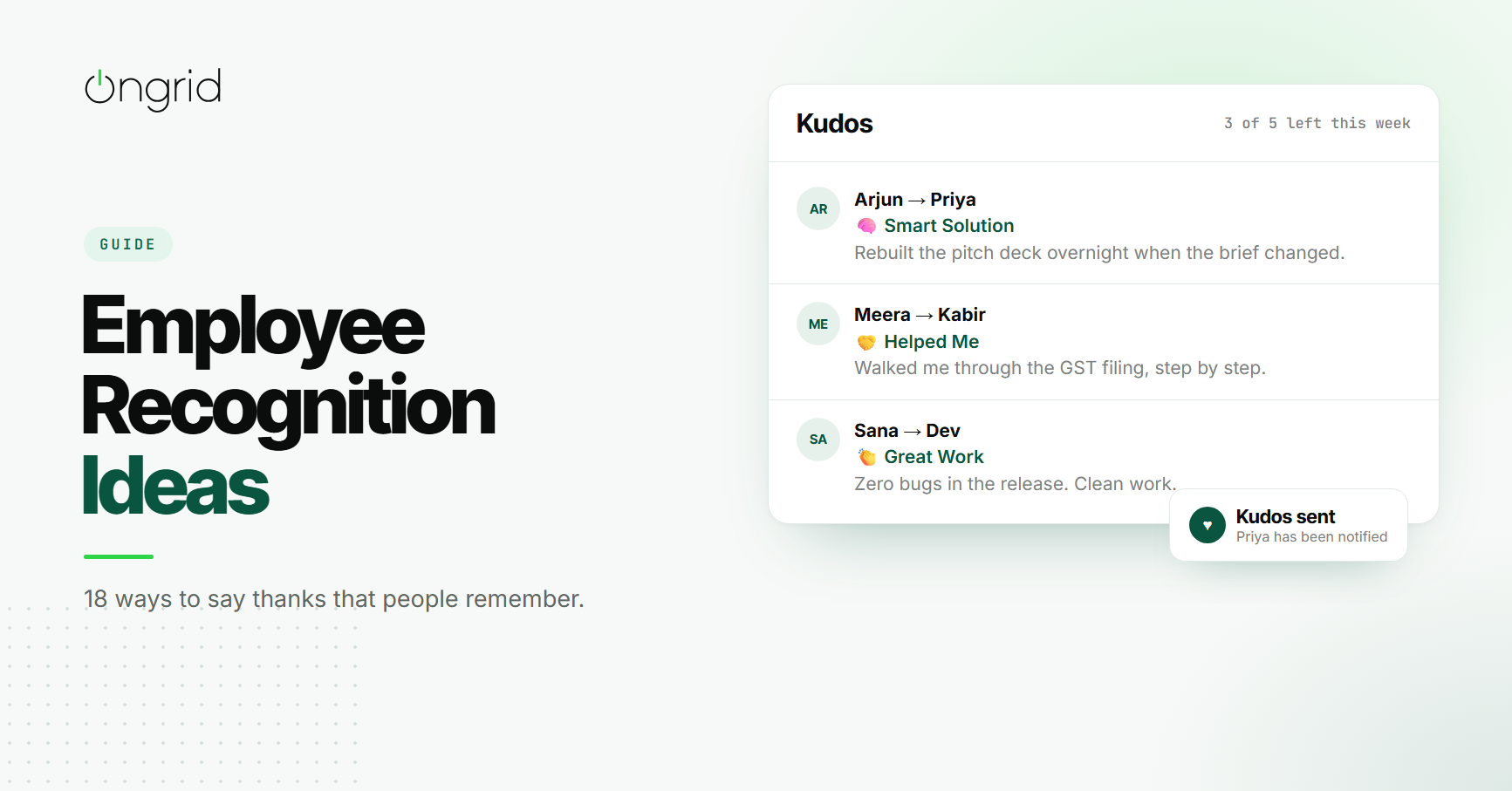
Priya rebuilt a client pitch deck overnight after the brief changed at the last minute. The pitch went well. The next morning, someone posted "great job priya 👍" in the team group.
By lunch, it was buried under messages about an invoice template, a lunch order and a broken Wi-Fi router.
That is how recognition works in a lot of small teams. Not because people do not care, but because nobody has a habit for it. Thanks happens when someone remembers, in whatever channel is open, in as few words as possible.
The good news is that the best employee recognition ideas are not expensive or complicated. They are specific, they happen soon after the work, and they reach the people who did it. Here are 18 that work well for small teams and agencies.
Why Recognition Matters More in Small Teams
In a team of eight or fifteen people, everyone's work is visible to everyone else, and so is the lack of thanks. One person carrying a difficult client for months without acknowledgement is noticed by the whole team.
Gallup's research on the importance of employee recognition makes the same point at a larger scale: recognition is one of the cheapest things a manager can offer and one of the most valued.
Small teams also rely on people going beyond their job description. The account manager who fixes a broken file at 9 pm, the developer who explains something to the intern twice. That kind of effort keeps happening when it is noticed, and slowly stops when it is not.
What Makes Recognition Actually Land
Before the ideas, four principles. Recognition that follows them works, whatever form it takes.
Specific: "Thanks for rebuilding the deck overnight, the client said it was the clearest pitch they had seen" beats "great work" every time.
Timely: the closer it is to the work, the more it means. A thank-you two months later feels like an afterthought.
Fair: the same three people should not be recognised every week while others are never mentioned.
Suited to the person: some people love a public shout-out. Others would rather get a quiet message.
Everyday Employee Recognition Ideas (Free)
1. Say Exactly What They Did
The simplest upgrade to any thank-you is detail. Name the task, the effort and the result. It shows you actually noticed the work, not just the outcome.
2. Let Peers Recognise Each Other
Managers do not see everything. Colleagues know who helped them debug a problem, covered a client call or shared a useful template. Give everyone an easy way to say thanks in a place the whole team can see.
3. Open the Weekly Meeting With Shout-Outs
Spend the first five minutes on wins and thank-yous before the status updates (the rest of the meeting gets shorter once you prioritise tasks properly). It sets a better tone for the meeting and makes recognition a habit instead of a surprise.
4. Forward Client Praise to the Person Who Earned It
When a client says "the designs were brilliant", it often stops with the account manager. Forward it to the designer, with a line of your own. It takes thirty seconds.
5. Let Them Present Their Own Work
If someone did the bulk of the work on a pitch or a report, let them present it to the client or the leadership team. Visibility is a form of recognition many people value more than praise.
6. Write a Handwritten Note
It sounds old-fashioned, which is exactly why it works. A short card left on someone's desk tends to stay pinned there for months.
Recognition Through Growth
7. Give Them the Next Interesting Project
The best reward for good work is often more interesting work. If someone handled a tricky client well, give them the next big account to lead.
8. Pay for a Course or Certification
Ask what they would like to get better at, and fund it. It says you see a future for them in the team.
9. Ask Them to Teach a Skill Internally
If someone has become the go-to person for something, ask them to run a short session for the team. It recognises their expertise and spreads it at the same time.
10. Involve Them in a Decision
Ask for their opinion on a new process, a tool or a hire. Being asked is a strong signal that their judgement is trusted.
Recognition Through Time
11. Give an Afternoon Off After a Big Push
After a launch weekend or a brutal deadline, a free afternoon is worth more than any gift card.
12. Offer a Flexible Day
Let them pick a day to work from home or start late. It costs very little and is genuinely appreciated.
13. Protect Their Focus Time After a Crunch
After a heavy week, keep their calendar clear of non-essential meetings for a few days. It is recognition that also prevents burnout.
Recognition as Part of Team Culture
14. Keep a Visible Record of Thank-Yous
A shared feed of recognition, where everyone can see who thanked whom and why, turns individual thanks into part of the team's story. It also makes it easy for people to find their own recognition later.
15. Celebrate the Invisible Work
Operations, finance and account management often keep everything running without anyone noticing. Make a point of recognising the work that prevents problems, not just the work that wins awards.
16. Mark Work Anniversaries and Milestones
One year in the team, a first client project delivered solo, a first month without missed deadlines. Small milestones are easy to forget and easy to celebrate.
Small Rewards
17. Order Lunch for the Team That Delivered
Not as a replacement for saying thanks, but alongside it. Shared food after a hard week works in almost every team.
18. Keep a Small Recognition Budget
A modest monthly amount that managers can spend on books, coffee vouchers or small gifts when someone goes beyond the usual. Keep it simple and avoid turning it into a competition.
Recognition Mistakes to Avoid
Only recognising the loud wins. The person who closes the deal gets praised, while the person who made the proposal possible does not.
Only managers giving recognition. It turns thanks into a performance review instead of part of everyday work.
Using recognition instead of fair pay. Thanks is not a substitute for a raise someone has earned. People notice the difference quickly.
Being vague. "Great job, team" on every project starts to mean nothing.
Putting quiet people on the spot. A public shout-out can be uncomfortable for some people. Ask first if you are not sure.
Build a 10-Minute Weekly Recognition Habit
The employee recognition ideas above work best when recognition does not depend on anyone remembering. A simple routine helps:
Every Friday, take ten minutes to look back at the week's finished work.
Pick two or three things that deserve thanks, including at least one quiet contribution.
Send a specific message to each person, or share it with the team if they are comfortable with that.
Once a month, check who has not been recognised in a while, and why.
How OnGrid Makes Peer Recognition Easy
OnGrid includes Kudos, a simple way for anyone on the team to recognise a colleague. You pick who helped, choose the type of recognition (Great Work, Smart Solution, Helped Me or Above & Beyond) and add a line about what they did.
The person gets a notification, and the kudos appears in a shared team feed. Everyone can switch between all kudos, the ones they have received and the ones they have given, so recognition does not disappear into chat history.
Each person gets five kudos a week, reset every Monday. It is enough to say thanks often, and few enough that each one still means something.
Final Thoughts
Most employee recognition ideas that work do not need a big budget or a formal programme. They need a habit, and they need to be specific.
Start small: name what someone did, let peers thank each other, forward client praise to the people who earned it, and make room for the quiet work as well as the big wins.
The thumbs-up in the group chat is better than nothing. But your team deserves a thank-you that lasts longer than one scroll.
Frequently asked questions
1. What are some low-cost employee recognition ideas?
A specific thank-you that names the work, forwarding client praise to the person responsible, a shout-out in the weekly meeting, letting someone present their own work, a handwritten note, and peer-to-peer kudos all cost nothing.
2. How often should employees be recognised?
Regularly enough that it feels normal, not rare. For most small teams, building recognition into a weekly meeting or routine works better than waiting for big milestones.
3. What is peer-to-peer recognition?
It is recognition that comes from colleagues rather than managers. Peers often see work that managers miss, such as someone helping a teammate or fixing a problem quietly.
4. Should employee recognition be public or private?
It depends on the person. Many people appreciate public recognition, but some find it uncomfortable. If you are unsure, start with a private message and ask whether they would like it shared with the team.
5. How do you recognise remote employees?
Make recognition visible in the places remote teams actually work: a shared kudos feed, team channels and meeting shout-outs. Be specific, because remote colleagues have fewer chances to hear informal praise.